
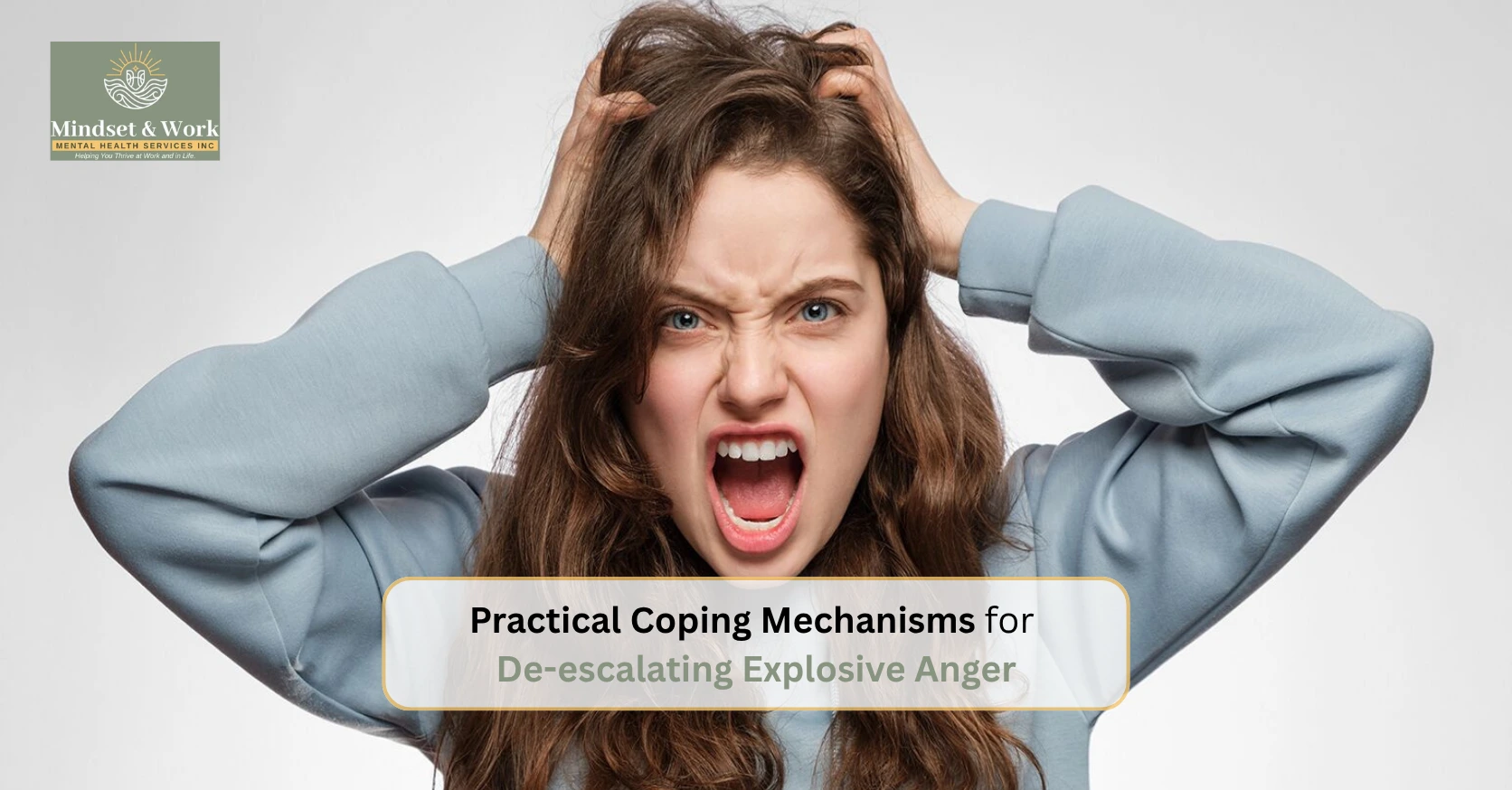
To reduce the intensity of explosive anger, begin by creating a gap in time.
Move away from the situation, decrease the rate of breathing and allow your body to calm down prior to speaking.
Once you have identified how you are feeling, return to address the issue at hand after you have had some time to reflect. It is the separation that will enable all other actions to take place.
You know the moment. Your face gets hot. Your heart is pounding, and a second later something comes out of your mouth that you can’t take back.
Afterward comes the part nobody talks about. The shame. Why did I do that?
If that sounds like you – know that you’re not a bad person. You’re a person with a stress system that fires too fast. And that’s something you can work on.
Why Does Anger Explode So Fast?
Anger isn’t random. It’s your body’s alarm system.
When you experience a feeling of unfairness, disrespect or threat your body enters “fight mode” within a short period of time.
As a result, your heart rate increases. Your muscles tense up. Your breathing becomes shallower.
When you get mad, the thinking portion of your brain is put on the back burner.
This is why people will tell you things when they are angry that they wouldn’t normally tell you.
This is what you need to know. Your brain cannot process thoughts when your body is in an “alarm” state. To get your thinking processes working again, you must first bring down your body’s level of activation.
What Are the Warning Signs?
Most people have a window. A few seconds – sometimes minutes, before the explosion. Learning to spot it is half the battle!
Watch for:
- A clenched jaw or fists
- Heat in your face or chest
- A racing heart
- Tight shoulders
- A louder or faster voice
- Pacing or the urge to move
- Thoughts like “I can’t believe this” or “they always do this”
Try this for a week. Each time you get angry, jot down what you felt first. You’ll start to see your own pattern.
What Can I Do in the Moment?
You don’t need all of these. Pick two or three that feel doable, and practice them when you’re calm.
| Skill | How Long | Best For |
| Pause and leave | 10 to 20 minutes | Arguments heating up |
| Slow breathing | 1 to 3 minutes | Anywhere, anytime |
| Cold water or fresh air | 2 to 5 minutes | Hot-faced, full-body anger |
| Grounding (5-4-3-2-1) | 2 to 3 minutes | Racing thoughts |
| Walk it off | 10 to 30 minutes | Built-up energy |
| Name the feeling | 1 minute | Catching it early |
1. Take a Pause (and Say It Out Loud)
Don’t just storm off. Walking out without a word can make things worse.
Try a line like this:
- “I’m getting too worked up. I need 20 minutes. I’ll come back.”
Then do come back. That’s the part that builds trust.
Even counting to 10 can help. Harvard Health notes that basic tactics like this are often useful for avoiding an outburst.
2. Slow Your Breathing
Anger speeds your breath up! Slowing it down tells your body the threat has passed.
- Breathe in through your nose for four counts.
- Breathe out through your mouth for six counts.
- Repeat for at least a minute.
The longer exhale is the trick. It’s what settles your heart rate.
3. Cool Your Body Down
When you’re furious, you run hot. Cooling off can help.
- Splash cool water on your face
- Step outside for fresh air
- Take off a layer or move to a cooler room
4. Ground Yourself in the Room
When your thoughts are spinning, pull your attention back to what’s around you. Try the 5-4-3-2-1 method:
- 5 things you can see
- 4 things you can touch
- 3 things you can hear
- 2 things you can smell
- 1 thing you can taste
It sounds simple. It works because your brain can’t spiral and count at the same time.
5. Move Your Body
Anger puts a lot of energy in your muscles. Give it somewhere to go.
- Brisk walk
- Do push ups or jumping jacks
- Climb stairs
- Stretch your shoulders and neck
Skip the punching walls and throwing things. That tends to feed the anger and can hurt you or someone else.
6. Name What You’re Feeling
Anger often sits on top of something softer. Hurt. Fear. Embarrassment. Feeling ignored. Being exhausted.
Ask yourself:
- What happened right before I got angry?
- What am I really feeling underneath this?
- What do I need right now?
Putting a name on it can take some of the heat out.
7. Change What You Say to Yourself
Anger loves words like “always” and “never.” As in “You never listen.”
Try swapping in:
- “This is really frustrating.”
- “I can handle this.”
- “They might not mean it the way I’m taking it.”
You’re not pretending everything is fine. You’re just not feeding the fire.
How Do I Talk About It Without Making It Worse?
Once you’ve cooled down, the conversation matters. Try “I” statements.
Instead of: “You’re so selfish. You never help.”
Try: “I feel overwhelmed when the dishes pile up. Can we work out a plan?”
A few more tips:
- Pick a calm time, not the middle of a fight
- Stick to one issue
- Listen without cutting in
- Say what you need, and be specific
- If you lost it, apologize without a “but”
How Can I Stop Explosive Anger Before It Starts?
In-the-moment skills are a bandage. The longer fix is lowering your baseline stress, so the fuse is longer in the first place.
Things that help:
- Sleep. Tired brains snap faster.
- Regular meals. Hungry, angry, and tired is a rough combo.
- Exercise. Even a short daily walk helps burn off stress.
- Less alcohol. It lowers your brakes.
- Time to decompress. Give yourself 10 minutes after work before you jump into the next thing.
- Know your triggers. Traffic? Money talks? Feeling disrespected? Plan for them.
- Talk to someone. Don’t carry it all by yourself.
Stress is a big driver. Our stress management page explains how we help. And if sleep is a problem, take a look at our page on insomnia.
Could Something Else Be Behind It?
Sometimes anger isn’t just a habit. It can be tied to something going on underneath.
It may be linked to:
- Depression, which can show up as irritability
- ADHD, which can make it harder to manage impulses
- Bipolar II disorder, with mood swings and irritability
- Poor sleep
- Past trauma or ongoing stress
- Alcohol or other substances
If your anger feels bigger than the situation, or it’s been this way for a long time, it’s worth getting checked out. Treating the root cause can make a big difference.
What Do I Do After an Outburst?
It already happened. Now what? Try not to spiral into shame.
- Calm down first. Don’t try to fix it in the heat.
- Own it. “I yelled, and that wasn’t okay.”
- Apologize plainly. No excuses.
- Ask what they need. Then listen.
- Figure out what set you off. What can you do differently next time?
- Make a plan. Write down your go-to skills.
Repair matters. People can forgive a lot when you take responsibility and show you’re working on it.
When Should I Get Professional Help?
Reach out if:
- Your anger is hurting your relationships, job, or health
- You’ve scared or hurt someone, or you worry you might
- You break things or lose control often
- You feel guilty and ashamed after most blowups
- You’re using alcohol or drugs to cope
- Self-help hasn’t worked
If you or someone else is in danger, call 911!
For emotional crisis or thoughts of suicide – call or text 988. If you’re experiencing abuse at home – call the National Domestic Violence Hotline at 1-800-799-7233.
At Mindset & Work Mental Health, we offer anger management support through secure telehealth, so you can get help from home anywhere in Massachusetts. A good first step is an initial psychiatric evaluation, where we look at what might be driving your anger and talk through your options.
FAQ
What is the fastest way to calm down when I’m angry?
- Slow down your breathing and step away from what is going on
- Breathe in for four seconds, then breathe out for six seconds
- Wait at least 10-20 seconds prior to attempting to discuss the issue with someone else
Is explosive anger a mental illness?
Anger is a typical human emotion.
However, when an individual has sudden outbursts of anger, there may be other factors contributing to those outbursts such as a mental health condition (depression, attention deficit hyperactivity disorder or bipolar disorder) or a traumatic experience (stress).
Why do I get so angry over small things?
A lot of times it’s the small things that break the camel’s back. When you’re feeling stressed out, tired, or already in pain, you will be much more sensitive to things that are bothersome to you. Also, if there are underlying medical problems, they may also contribute to this sensitivity.
Does venting or punching a pillow help?
Not necessarily.
How long does it take to get better at managing anger?
It depends! Some individuals can see small results within the first few weeks of starting. It often takes several months of consistent practice to make a permanent change!
Take the Next Step
You don’t have to white-knuckle this alone. Getting help isn’t weakness. It’s a smart move.
- Book an appointment
- Call (617) 858-1490
- Learn about anger management
- What to expect from telehealth
- Meet our team
- Keep reading on our blog
This article is for education only and isn’t medical advice. It doesn’t replace care from a licensed professional.
Source: Harvard Health, Seeing red? 4 steps to try before responding