
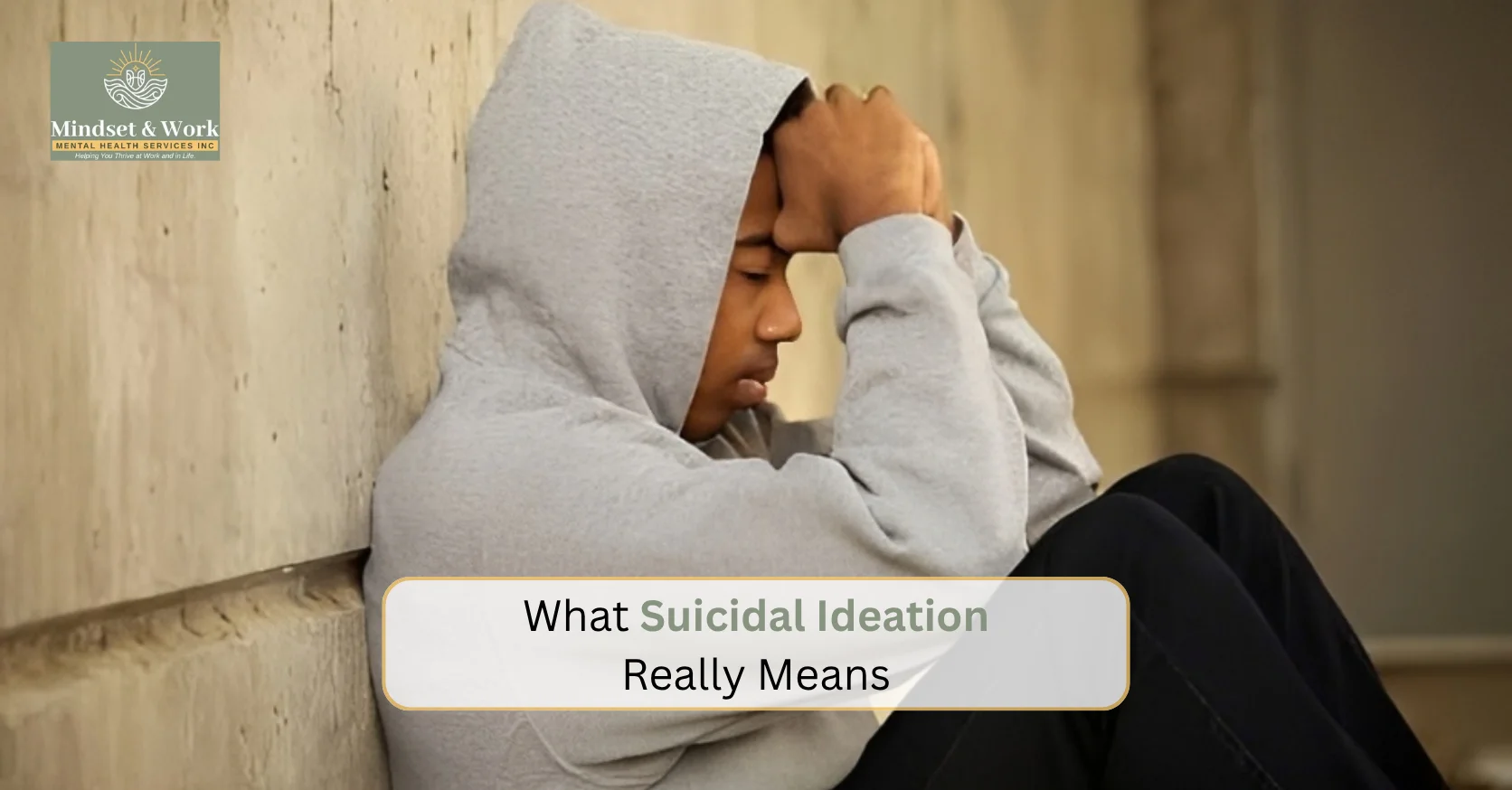
“Suicidal ideation” gets thrown around constantly in clinical settings, and honestly, it rarely gets explained in a way that actually means something to the person hearing it.
Most people picture the worst version. Someone with a plan already in motion, ready to act. That’s part of it. But it’s really not the whole picture, and that gap is part of why people end up waiting way longer than they should before saying anything to anyone.
Passive Thoughts Aren’t The Same As Active Ones
There’s more of a spectrum here than most people assume. Clinicians tend to split it into two rough buckets.
Passive ideation is wishing you weren’t alive, no plan attached to it. Something like “I wish I could just not wake up” or “everyone would be better off without me.” No timeline. No method in mind. Just this heavy, ongoing wish to be done with the pain of being here.
Active ideation goes further. Real thoughts about ending your life, sometimes with a plan already forming, maybe even a timeline or access to means already thought through. This is the one that needs attention right now, not next week.
Both matter, though, and that’s the part people miss. A lot of folks figure the passive thoughts aren’t “bad enough” to bring up, not even to a doctor. That’s where the real damage happens, because passive can slide into active without much warning, and catching it early is what actually changes the outcome.
Why This Happens In The First Place
Most of the time, it’s not really about wanting to die. It’s about wanting the pain to stop and not being able to picture another way out.
Depression’s the most common thing behind it, but it’s far from the only one. Chronic pain. Overwhelming stress. Grief that hasn’t had anywhere to go. Trauma. Substance use. Feeling like a burden to the people around you. Sometimes it’s one obvious thing. A lot of the time it’s several things stacking up quietly until it’s just too much to carry anymore.
That reframes the whole thing, really. These thoughts aren’t some character flaw or a lack of willpower. They’re a signal, pointing at something underneath that needs real attention.
A Myth That Needs To Go Away
People avoid asking directly if someone’s thinking about suicide all the time, worried the question itself might put the idea there.
The research says the opposite, and it’s pretty consistent on this. Asking doesn’t increase the risk. If anything, it usually gives someone the opening to finally say out loud what they’ve been sitting on alone for way too long.
A calm, direct question, without panic behind it, tends to open a door instead of closing one.
Signs Worth Noticing
Pulling away from people. Giving things away. Talking about being a burden. A strange sense of calm right after a stretch of real distress. Drinking or using more than usual. Even just saying once, offhand, that they don’t want to be here anymore.
None of these automatically mean someone’s in danger. But any one of them is reason enough to ask, gently, instead of hoping it passes on its own.
What Actually Helps
Treatment depends a lot on what’s underneath, but a few things tend to help no matter what that is.
Therapy, especially something like CBT or DBT, gives people real tools for sitting with pain without it swallowing them whole. Medication can help when depression or something similar is driving the bus. And a safety plan, something actually written down for what to do if the thoughts get louder, gives people something solid to reach for in the worst moments.
None of this requires having it all figured out first. Most people start treatment in the thick of struggling, not after they’ve already sorted everything out alone.
If This Is Where You Are Right Now
If you’re dealing with this, passive or active, you don’t have to carry it by yourself, and you don’t have to wait until it gets worse to reach out.
Call or text 988 to reach the Suicide & Crisis Lifeline, day or night, any time. Text HOME to 741741 for the Crisis Text Line. If you’re in immediate danger, call 911 or get to the nearest emergency room.
Reaching out doesn’t mean something’s permanently broken in you. It means you’re taking what you’re feeling seriously enough to get real support, and that’s exactly the right call.
If You’re Worried About Someone Else
Ask them directly. “Are you thinking about suicide?” is a hard sentence to get out – maybe one of the hardest, but it matters more than almost anything else you could say.
Listen without jumping straight to fixing it. Help them find support, a crisis line, a therapist, a doctor, whatever fits.
Getting Support
Getting Support
This is way more common than people think, and it’s treatable.
Talking to someone trained in this, before it turns into a crisis rather than during one, can genuinely change how things go from here.
Reach out to MWMHS to learn more about mental health support, or to set up time with a provider who can help you work through what’s going on.
If you or someone you know is in crisis, call or text 988 to reach the Suicide & Crisis Lifeline, available 24/7, or call 911 if there is immediate danger.